

-
Posts
6 -
Joined
-
Last visited
Content Type
Profiles
Warranty Claims
Downloads
Forums
Store
Services
Downloads Plus Support
DOWNLOADS EXTRA
Everything posted by The_X_
-
 Admin Map is a product that creates a need for itself. I never thought I would end up using Admin Map. There is a game map, and everything is clear with it. The plugin simply adds player markers to it. I bought it in a bundle with Admin Menu because it was a good deal. But after installing it and using it in my daily admin activities, I was surprised: ‘How did I ever live without this?’ Previously, teleporting to player requests to the administration was not such a big problem. But now, through the Admin Map, I can quickly assess the location of the player, the players around them, and the houses around them. I immediately have some background information. Teleporting to a player has become much easier. Sometimes I need to analytically go through the sleeping players and houses to gather some summary information about the map load. With Admin Map, this has become much easier. I can visually see the entire map and can detail information about specific objects right in the map menu. It also affects performance. Essentially, you need to update information about all players on the map, every game tick, draw all these markers, and other plugin activities. I expected that I would sacrifice server performance for it... But, surprisingly, performance did not drop at all. I don't know how the developer did it, but this plugin does not affect performance at all. These all seem like insignificant details, but in the daily minutiae, the plugin makes itself loved. Anything that simplifies the admin's life seems amazing to me.
 -
 Admin Map is an administrator's best friend for everyday use. Server administration consists of a set of small but useful details. Often, attempts to cover all these niches result in an unstructured chaos of the interface. However, 0xF has done an excellent job of designing it. The way the item delivery menu is designed seems strange at first, and we still used the F1 menu. But over time, we smoothly transitioned to the plugin menu because it's so convenient in the little things... Better? The group functions are incredibly convenient. But the privilege management menu, in the form of a ‘tree’, proves to be extremely practical... You can get more information from the menu than you can with the standard game tools. Grouping by plugins has made everything much more convenient... Rating this plugin in terms of how much time it saves - 10/5, but unfortunately, due to limitations, I can only give it 5/5.
 -
 My impressions of the plugin are very strange... I feel like the plugin is ahead of what the author can provide. Let me explain my thoughts a little. I see that the plugin has a concept similar to SkillTree. You have some ‘perks’ that you need to unlock. Each perk has a different buff_value. They took all of this and made it unlockable through items. Overall, the idea is not bad. But there are some nuances. From a configuration point of view, the plugin is very poorly made. The configuration side is important in the interaction between the ‘client’ and the plugin. Here, we have ungrouped options first. Then I remember the perks, and you configure different perks in separate options throughout the configuration. At the same time, the same perk can be split across several places. Then, in the middle of all this, the developer remembers the privilege settings for the plugin, then forgets about them, and goes back to the perks. In between, they sometimes remember some important settings... The configuration is unstructured, confusing, and lacks a clear vision of what is wanted from it. As a result, working with it turns into ‘Oh... Do I need this? Well, the keyword for this is probably tangent,’ you press Ctrl + F, and in this way try to find keywords, digging into the depths of this configuration. The plugin itself, on the admin side, is very strange... Its interface is surprisingly complicated... It's difficult to describe objectively, but I felt uncomfortable working with it. For example, at the very beginning, the plugin comes with pre-made artefacts... I didn't need them, except for literally one or two. What do I expect to see as an admin? A small cross next to the icon, with a confirmation menu for deletion. In the item itself, next to its preview, next to the update skin button (?), something similar to a cross. Okay, with a high level of nesting, I would expect to see the coveted button in the menu where the item name is edited and there are configuration checkboxes. It's not there! How did I solve the problem? I: 1) Opened the item I wanted to delete 2) Went deep into the interface to the name settings menu 3) There is a field with SkinID, which I copied/remembered the last digits of 4) I went to the Data folder for this plugin and opened the list of all items 5) I searched for a specific item and opened its file. 6) I made sure, based on indirect evidence, that it was indeed that item 7) I deleted the file I restarted the plugin. This cycle of actions had to be performed for each item... Okay, I did it! I broke through! Then, I started to develop more complex logic, with several levels of items... Thinking that I would be provided with tools, I took some pictures for artefacts that reflect the essence - and are just temporary. I set up more than 20 such ‘artifacts,’ wrote all the transformations in synchronisation... And it worked. But then I decided to update the images to more stylistic ones. I go into the item, go into the settings, see the fields with the skin, and want to replace it... It seems like something is being inserted, I close it... I update the skin... And nothing happens. The item remains the same... It turns out that the skin field is copy only. It just displays information and doesn't save anything. What should I do? I want to keep the same buffs... The same numbers, just change the externally displayed image. Let it be there, and then update everything that referenced this item. What can the plugin offer me? Delete all items... Redo them with a different base skinid. Then, redo them in all add-ons... I think you get the idea. After six hours of reworking, the artefacts are ready... Let's say I want to make an option to open in some menu. I enter the command in the desired option, and the menu self-destructs and kills itself. The only way that ended up working was to use only the button... Not from the button manager (a third-party plugin) with special convenient options for their visual configuration. But directly from the config... Which put everything in a pile, and I had to combine the settings of the Icon and Background to get a simple button. We record more hours of work. Well, finally it's ready for players! And in this regard, in fact, there are almost no complaints. Well, how... The developer made beautiful animations and a cool mixing table menu... Wow, magic! The plugin shows itself on the administrator's side, who has to deal with it, at 1/5. For the user, however, the main development hours were spent. And there are no particular complaints. The result is 5/5. Averaging these two ratings, we get 3/5. Overall, at a discount, you can get it for 15-20$ (as i did). But at full price, for which commercially ready-made and customer-oriented events (for example) are sold, don't even think about it.
 -
 It's difficult to say anything about this plugin. When you make a bunch of items, it can be extremely difficult to navigate them, even for you. In Minecraft, there was and still is the well-known JEI/NEI for this. But when it came to Rust, there were no convenient solutions for providing users with information about items. In this regard, the plugin is insanely simple and ingenious. It simply contains a collection of all custom items with descriptions. You can view the entire collection or information about a specific item. That's it. The plugin's interface is extremely simple; instead of native components, the simplest ImGui was used. This makes it a little ugly, but does not negate its importance for any server. At the moment, there is no alternative solution to this pressing problem.
 -
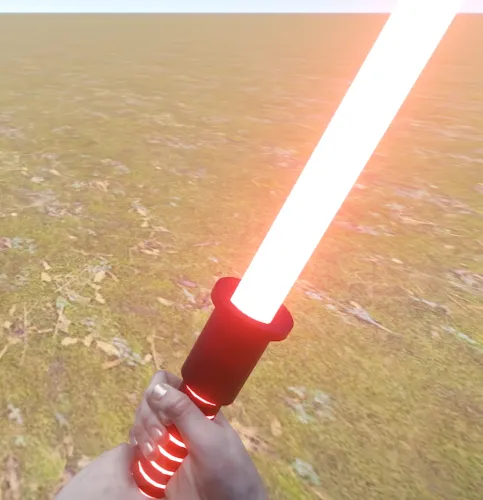 I'm not quite sure what to write in my review. This plugin completely changes the way things work. I have a server where custom items have an excessive influence. There are dozens, if not hundreds, of them. With the classic approach, using SkinID, I would spend hours just setting everything up to work with skins. And if I wanted to change a simple name or skin for an item, I would have to redo all that work. Thanks to the library, I forgot about that a long time ago. I have human-readable short names that fully describe the item (I don't specify anything else except this short name anywhere else), and that's it... Every change is automatically pulled into all possible places. And even the fact that library support isn't even required, the library becomes part of the Rust core, makes this thing just insane. Let's say that any plugins using a list of items immediately receive these items, and they are even sorted correctly by category (the category of the parent definition will be the same as the category of the item itself). If something was tied to some specific hooks, such as OnExplosiveThrown, or an action such as unwrap in a New Year's bag, it is automatically supported and provided by the library. You can even say for sure that if ‘something’ performs poorly with custom items, then most likely the fault lies with that ‘something’. When you have a magic box that, upon first integration, frees you from dozens of hours of routine work, saving you hours of your time (for example, to touch the grass), how can I say anything bad about it? And the developer, who also provides support for any issues that arise with this plugin and adds even more crazy and incredible features to its functionality, deserves special praise. A wonderful library that does unimaginable things.
 -
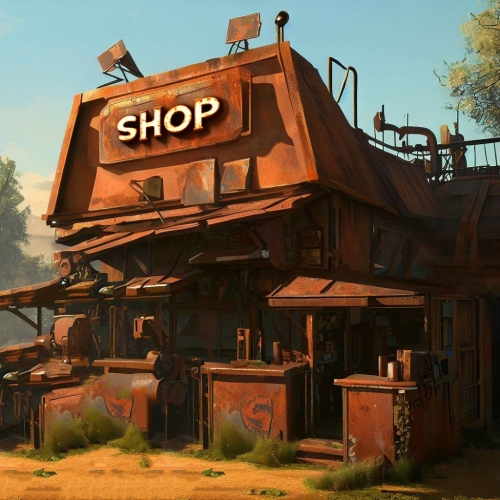 Initially, I was very sceptical about this plugin. Usually, anything related to NPCs either works extremely poorly or provides very limited functionality. But here, I must say, the developer has done a great job. For starters, he has almost completely abstracted the config file, providing most of the options from the interface. It seems like a small thing, but it has a positive effect on the user experience. You don't have to put in a lot of effort for each NPC. All the options are provided to put on the necessary armour, write a command, and the NPC is ready. The NPCs themselves are made to look the same as standard vending machines. The fact that the developer understands the interaction formats familiar to users and does not try to reinvent the wheel shows his level of customer focus. The developer fully understands the context in which his plugin will be used and implements a number of very important fundamental things. If his plugin did not support MonumentFinder, it would be much less useful. If it did not support different types of economies, it would also greatly limit its application. All in all, this makes this plugin the best in terms of NPCs and practically the only solution available.
 -
 Amazing Plugin! The interface, at first glance, seems quite complex, however on the very first attempt to work with it, it turns out to be intuitively understandable. All elements are located exactly where they should be. Editing loot tables is intuitive, yet very flexible at the same time. You can configure individual item drops, blueprint drops, as well as item "categories". Regarding the default loot table, as some reviews point out, it doesn't match Rust's default table. I categorically disagree with this - even with minimal research, I discovered that when loot isn't specified as custom, the developer simply calls Rust and asks it to fill the loot instead of the plugin. This is the most correct logic possible. I've also seen comments regarding plugin performance, referring to high Hook Time. I don't know since when this became an indicator of plugin "performance" when this can only be discovered through actual observations, but it's probably high. No actual performance impact was detected. Whether the plugin is there or not, the server doesn't really care. The plugin takes control exactly at the moments it should, and timely returns control to the game for everything else. From the downsides, due to how much the developer has to display within Rust's standard toolkit framework, the interface sometimes "freezes". This doesn't affect server performance at all, and is solved by simply reconnecting to the server. Stack Sizes Feature Additional functionality, such as Stack Sizes, seems like it will be implemented as secondary. But the stack editing is done so well that you could say it's a plugin within a plugin. The item list is dynamic - the plugin doesn't need updates every new wipe. Each individual item is configured both separately and as part of a "unified whole". You can take standard stack sizes and multiply them by a certain number with one value. Immediately for all items. This same option is available for each separate item category. If some item that has multipliers applied also has a manually set stack size, the plugin will handle this correctly, choosing exactly the manually entered size. From the downsides, when there are quite a few items in a category, they're divided into several pages, and finding a specific one requires some effort and visual representation of the item icon you want to edit, which can be inconvenient. But in version 2.1.15, the developer added a search bar, which completely solves the problem of finding specific items. Custom Items Manager The built-in custom items manager seems quite flexible. It automatically picks up the most trivial custom items, allows adding new ones, and accordingly the entire loot table now assumes the existence of such items and the possibility of their drops. LoottableAPI Integration At some point while interacting with the plugin, I faced a task - I needed to configure a very large loot table in ANOTHER PLUGIN, and that one didn't provide Loottable support. And it even blatantly ignored standard loot, deleting box contents and rewriting it with its own. This is, at the very least, inconvenient. I thought to myself that the effort to configure loot would be much greater than the effort to manually add Loottable support to existing code. I went with the second path, and very successfully discovered LoottableAPI in the plugin description. This is essentially ready-to-use, modular code that provides a simple and static interface for adding support to ready-made code for configuration through Loottable. The developer even wrote an example that, in a maximally simplified yet clear and precise way, demonstrates the working principle: Register presets for NPCs/boxes Assign the preset when spawning a box or NPC Total additional lines of code needed for any plugin, including the ready-made code provided in the description: 100-150 additional lines. I've currently added interface configuration to 18 plugins, and everything works stable as clockwork. There was a problem that with more than 6 plugins configured through Loottable, the display of new plugins started breaking (the developer didn't expect someone to have more than 6 plugins configured through Loottable), however in version 2.1.16 the developer added multi-page functionality to this section, and the problem resolved itself. Developer Appreciation Special thanks to the developer. Such responsiveness, it seems, is rarely encountered. I personally needed correct work with Custom Item Definition (CID) for my purposes. I knew that in version 1.1.6 stacks were properly fixed to work with custom items. And indeed, there were no problems with stacks. However, several small details were discovered where the plugin incorrectly handled CID. Simply collecting them into a single bug report and informing the developer, already in the next update the developer quite extensively fixed the plugin so that it would completely correctly load custom items. And all this - from just one bug report. Now the plugin works perfectly with CID, and I'm confident that if any problems still surface, the developer will fix them. But this is individual experience. It's also worth noting that the developer constantly updates the plugin, adding various QOL functions. For example, in update 2.1.15, the developer added multiple item selection. This is a small detail that could be done without, but it improves user experience and accordingly the overall impression of the plugin. Huge thanks for such excellent work! P.S. Review written at the time of version 2.1.16. On this version everything works as described in the review. If suddenly the developer goes crazy, breaks all plugin performance, gets rid of all useful functionality, I'll definitely update the review xD
- 1,144 comments
-
- 1
-

-
- #loot
- #customloot
- (and 13 more)