

About Vote Reward
Vote Reward
Turn votes into rewards players can claim

Give voters a familiar /vote command and a catalogue they can browse and claim from. Vote Reward combines the vote-points service and reward engine in one matching download.
Normal bundle: VoteReward 2.1.4 + VoteSystem 2.1.5 + CustomRewards 2.0.4. The interface is native CUI; PimpMyCUI is not required.
- The player votes on a provider you have configured.
- VoteSystem checks the provider and records the player's vote points.
-
The player opens the catalogue with
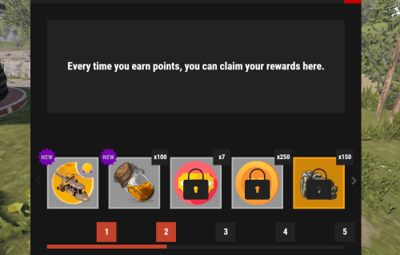
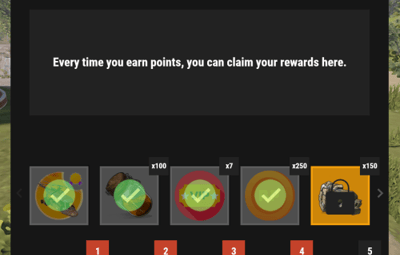
/voteor another configured alias. - CustomRewards shows unlocked, locked and claimed rewards, then checks the claim before delivering it.
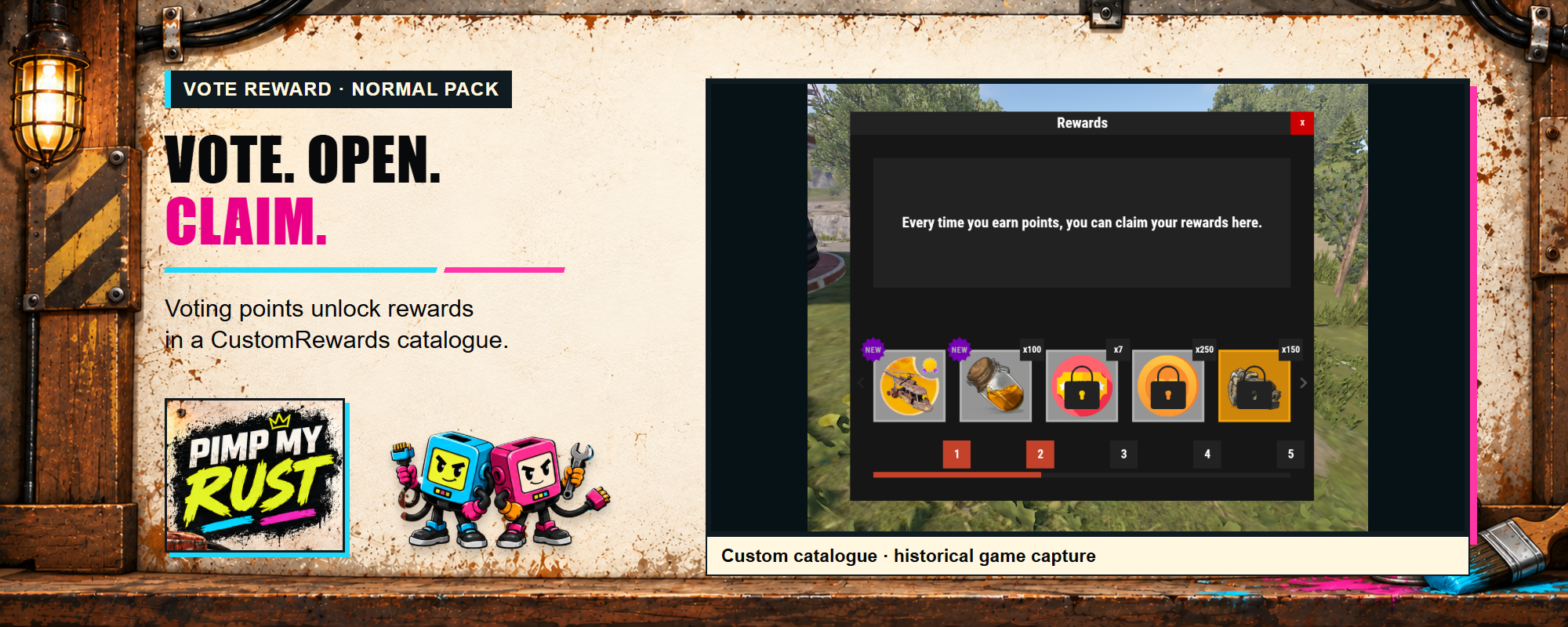
1 point unlocks the first reward, 2 points the second, and so on. Claiming does not spend those points. Choose a progression appropriate for your server, with items, commands, permission changes or group changes.
The native catalogue shown above is a historical capture of a custom example. The supplied starter contains one 100-wood reward, not this multi-reward progression.
Configure the vote pack in one workspace
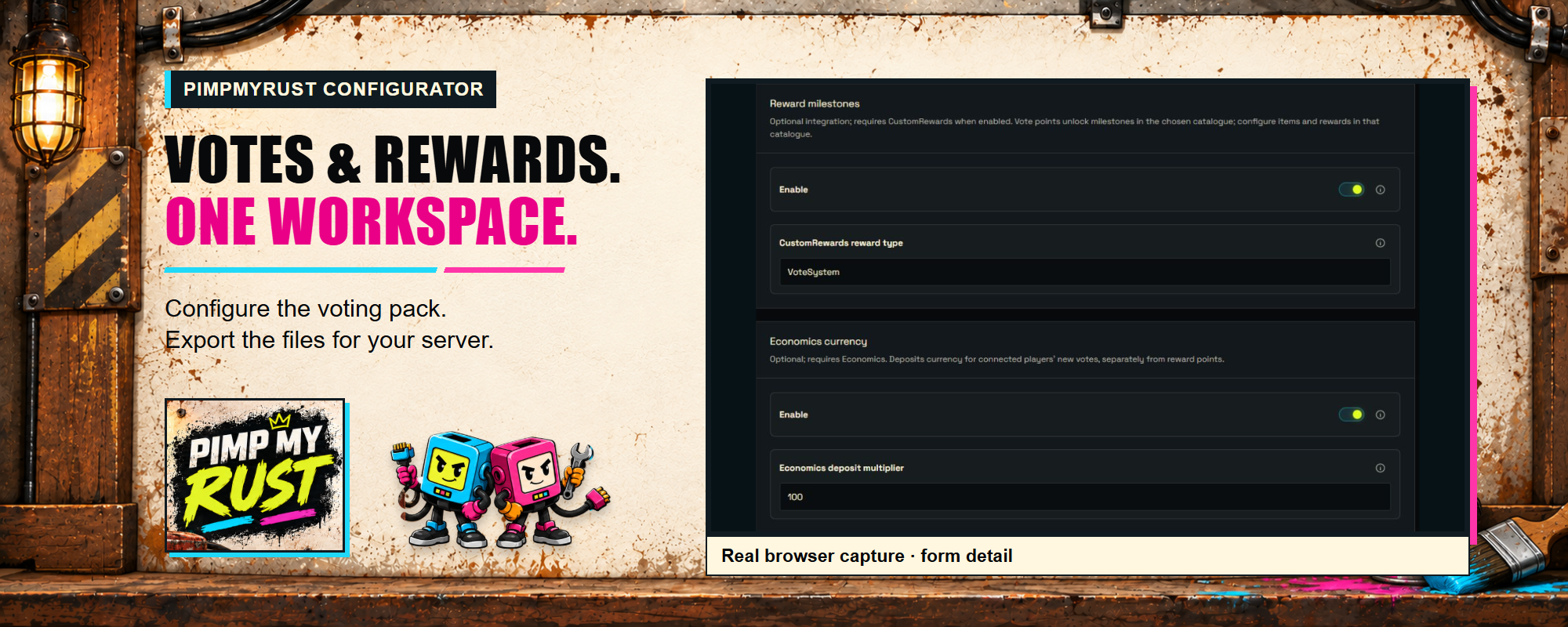
Set vote providers, choose the commands players use, build the reward catalogue and edit its language files. Import your current files and export the configuration or catalogues you need.
Configure Vote Reward on PimpMyRust →
The combined workspace includes the VoteSystem settings. CustomRewards is required by the normal Vote Reward pack; Economics deposits are optional.
Redesign the reward UI with the separate beta
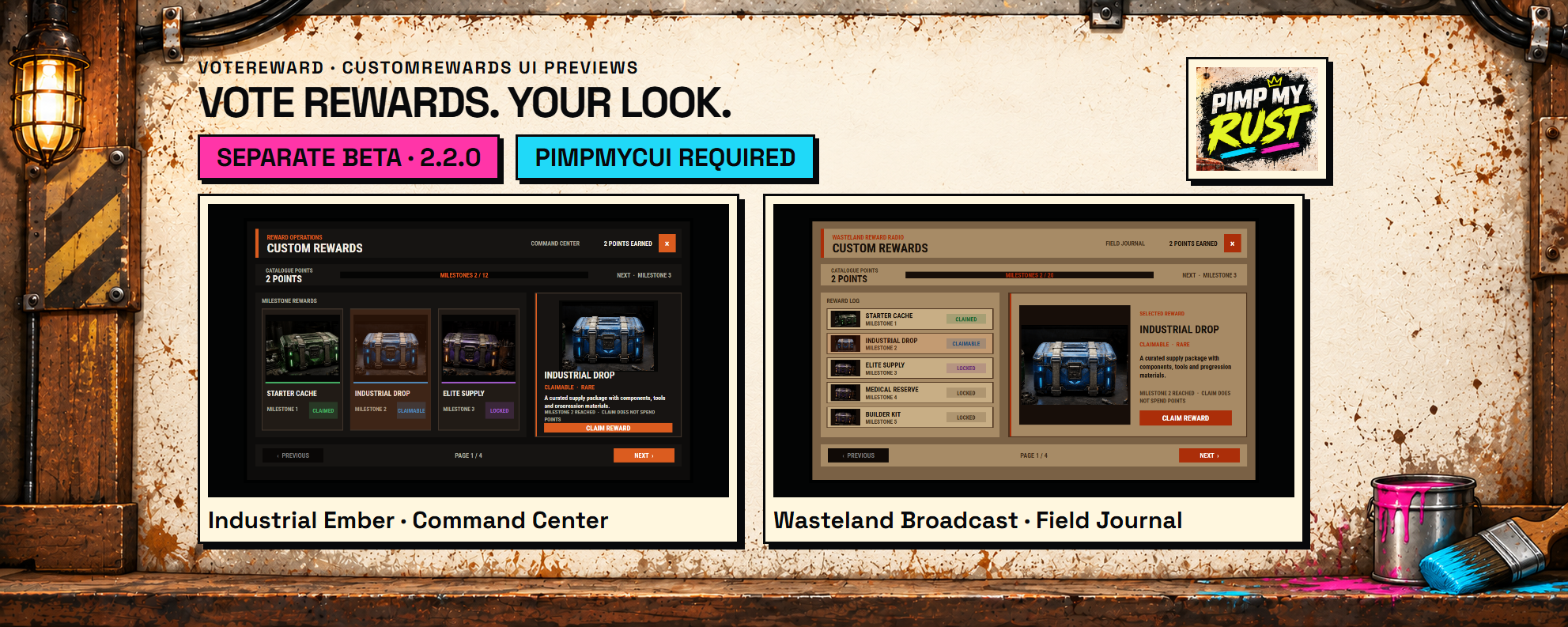
Vote Reward 2.2.0 beta is a separate download on PimpMyRust. Choose a PimpMyCUI-based reward layout and edit its appearance in the visual Editor.
The beta preview uses sample reward data. It is not the native interface included in this normal bundle.
Explore the Vote Reward beta →
Sign in to PimpMyRust, link your Codefling account and refresh your purchases. Beta access is for verified Vote Reward buyers. Install the free PimpMyCUI plugin separately and keep the matching beta components together; do not mix beta and normal components.
What the normal download includes
- VoteSystem: Top-Serveurs, Top-Games and Rust-Servers.net polling, player points and optional Economics deposits.
- CustomRewards: the native catalogue, pagination, rarity colours, reward requirements and delivery.
- VoteReward: chat entry points and checks that the two required components and selected catalogue are ready.
-
Starter files: example configuration, a
VoteSystemreward catalogue and its English messages.
Both supporting plugins are required and included. Economics is optional and not included. Add your own progression to the one-reward starter before enabling it for players.
VoteSystem details → · CustomRewards details →
Set up your providers and catalogue
- Back up existing configuration, language files and VoteSystem/CustomRewards data.
- Install all three supplied plugin files. For manual loading, use CustomRewards, VoteSystem, then VoteReward.
-
For a new server, copy the sample catalogue from
Examples/oxide/data/CustomRewards_rewards/to the matching server data folder, and its language file tooxide/lang/en/. - In VoteSystem, enter your provider tokens and enable the providers you use. All providers start disabled.
-
Keep the same reward type across the stack:
VoteSystemby default. In CustomRewards, review the rewards and enable the catalogue. -
Grant
customrewards.votesystem.useto the players who should open it. Reload and test with a non-administrator account.
The default chat aliases are /vote, /votes, /vote_rewards, /vote_reward, /votes_reward and /votes_rewards. Change them in VoteReward; avoid registering the same alias in another plugin. The supplied CustomRewards catalogue leaves its own show-command list empty for this reason.
Voting identity and this bundle update
Top-Serveurs and Top-Games players enter their SteamID64 in the site's nickname/player-name field. No manual nickname mapping is needed for new votes. To allow server nicknames, explicitly enable Enable nickname votes for that provider. Exact duplicate or unresolved names wait instead of being guessed.
Neither a freely entered SteamID64 nor a nickname proves Steam ownership on these two sites. Rust-Servers.net keeps its SteamID ranking and Steam OpenID voting workflow.
This bundle revision updates VoteSystem to 2.1.5 only. VoteReward 2.1.4, CustomRewards 2.0.4 and the native catalogue are unchanged. Existing users of these normal versions can replace VoteSystem.cs and keep their custom files. Read the included migration instructions before updating; never overwrite existing data with starter files.
Requirements and support
Rust with Oxide or Carbon, your voting-provider accounts/API tokens, and all three included components loaded. VoteReward stores no separate player balance: VoteSystem owns points and CustomRewards owns claims.
For support, include all three plugin versions, the selected reward-type name and the first relevant error. Redact tokens and private player data.
Codefling support · PimpMyRust Discord




.thumb.gif.b404fe75a865c5970e3e6d6e58fe53ad.gif)